Design, Tools And Chapai

Block Carvers: Giving The Design Its Form

Before a needle follows a design, its outlines need a clear form. In traditional block-guided Chikankari, a wooden printing block carries the motif that will be transferred onto fabric. The block carver translates a drawn pattern into a working tool, keeping the main outlines and smaller spaces legible.

Block carving and printing are related but distinct skills. The carver prepares the block; the printer positions its impressions across the garment. In Chikankari, the resulting marks guide embroidery placement and are intended to be removed during washing.

Portrait of the actual block carver beside a wooden motif block.

The Carver's Eye For Detail

A drawing must remain readable when it becomes a carved surface. Petals, curved stems and repeating edges need enough separation to produce a usable guide. The artisan considers how the shape will print, as well as how it looks on the block.

The carver’s contribution remains present in the proportions of the finished motif, even after the temporary guide has been washed away.

Close-up of carving tools and the actual wooden block, with the artisan working.

Tools That Shape The Motif

A block photograph reveals an earlier stage of the garment: the design before it reaches the fabric. The tools, the block and the resulting impression connect three views of the same idea: a drawing, a printing surface and a pattern ready for needlework.

A close view of the block makes the outlines and spaces between them easier to understand.

Detail of the resulting temporary floral or paisley print on fabric before embroidery.

From Wooden Block To Printed Guide

The printed guide gives the embroiderer a map for placement. Borders, scattered motifs and denser areas of decoration can each have different arrangements. A clear impression helps the artisan read where the work belongs.

Chapai is a preparatory guide. The permanent detail of the garment comes from the embroidery that follows it.

Needle, Thread And Judgement

Hand Embroidery Artisans: Bringing Each Motif To Life

The printed design establishes an outline; the embroidery artisan determines how that outline becomes threadwork. Needle movement, stitch spacing and tension influence how a leaf fills, how a flower rises from the surface and how a pattern reads against the fabric.

Chikankari includes techniques with different visual effects. Bakhiya is associated with a shadow effect, Murri with slender raised details, and leaf-form stitches with filled foliage. A stitch name describes a technique; an individual artisan’s photograph and story reveal the person practising it.

Portrait of a real hand embroidery artisan, with a garment they worked on.

Following The Design, Choosing The Stitch

An embroiderer reads the motif as a sequence of decisions: which line needs an outline, which shape needs filling and where raised work will give definition. Different techniques can sit within one composition.

The finished surface carries the results of those choices. Looking closely at one motif makes it easier to appreciate the separate skills needed for outlining, filling and raised detail.

Photograph of the artisan’s hands stitching the actual printed fabric.

Hands At Work On The Fabric

The fabric changes the way the embroidery is handled. Its weight, weave and transparency affect the desired surface texture and how the threadwork is viewed. Fabric and embroidery should be considered together when developing a piece.

A photograph showing the needle, thread and unfinished motif makes this stage clear. The unfinished area also shows how the design develops gradually as the artisan works across it.

Macro photograph of verified Bakhiya, Murri or leaf work from an actual Luxe garment.

Reading Texture In A Finished Motif

A close-up can separate effects that are difficult to see in a full outfit photograph: the soft appearance of shadow work, a raised detail and a filled leaf. Each technique has a different role in the composition, and its name is most useful when it can be connected to a visible example.

The Aanvi Mul Chanderi saree listing identifies Bakhiya, Murri and Chana Patti among its artwork. Its listed techniques offer a starting point for looking more closely at texture in a finished garment.

Light, Texture And Decorative Detail

Add-On Kaarigars: The Finishing Embellishments

Some Chikankari designs include additional decorative work. Mukaish, bead-like details and sequins can bring a different surface effect alongside thread embroidery. These additions belong to their own techniques and should be identified separately from Chikankari stitches.

The selected embellishment changes the visual emphasis of a garment. A metallic detail catches light; a rounded accent adds a point of interest. The purpose of this section is to show the kaarigar’s contribution clearly, using the decorative work actually specified for the collection.

Portrait and hands-at-work photograph of the actual Mukaish kaarigar.

Mukaish: A Metallic Contribution

Mukaish is metallic embellishment rather than a thread embroidery stitch. A close-up helps distinguish its reflective appearance from the surrounding threadwork. The two forms of decoration can be appreciated individually within the same design.

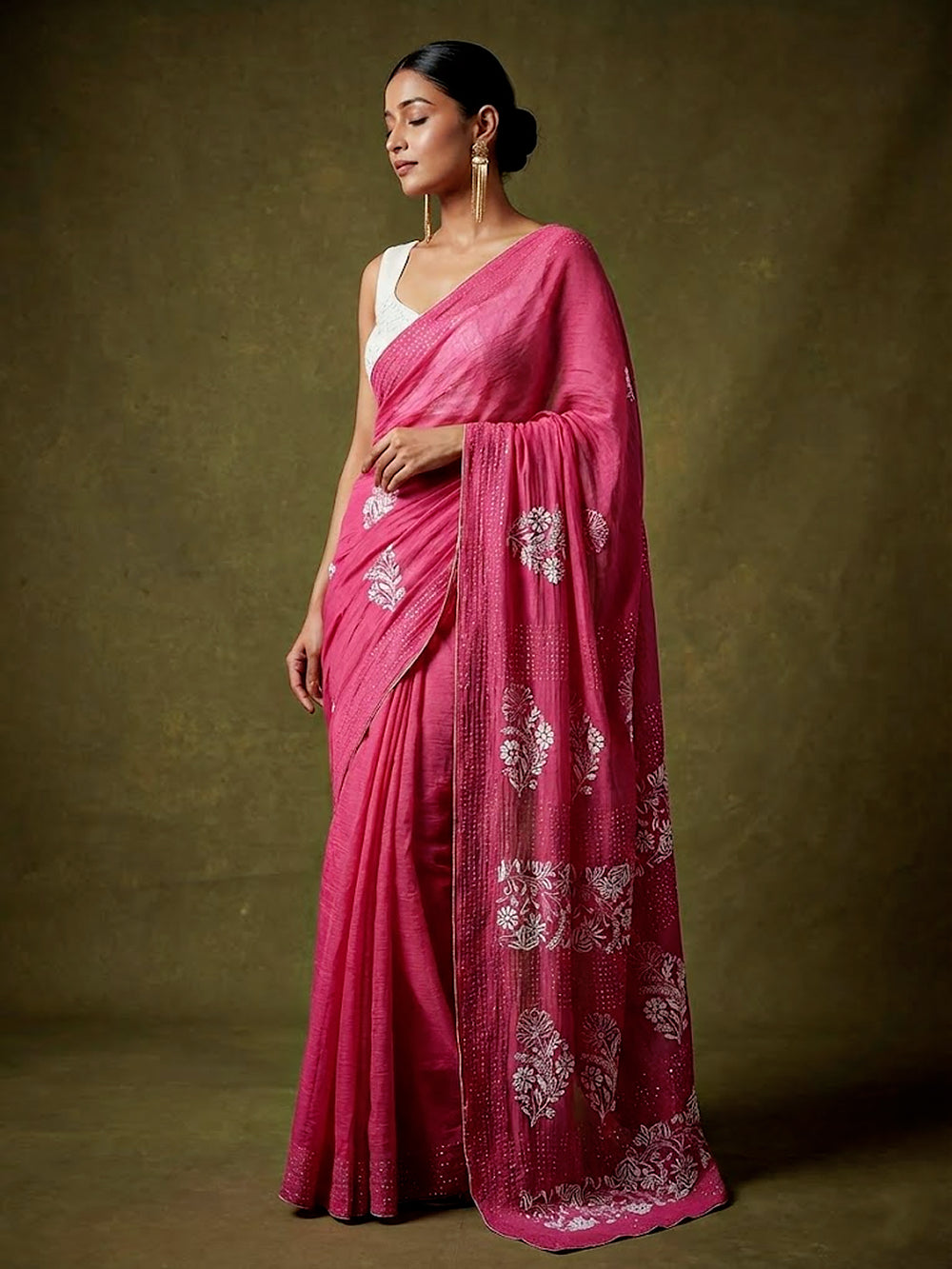
The pink Aanvi saree lists Mukaish alongside its embroidery techniques. This combination makes the distinction between needlework and metallic decoration particularly useful when reading its details.

Close-up of the pearl and moti accents on the Beige Mul Chanderi kurta with dupatta.

Pearl And Moti Details

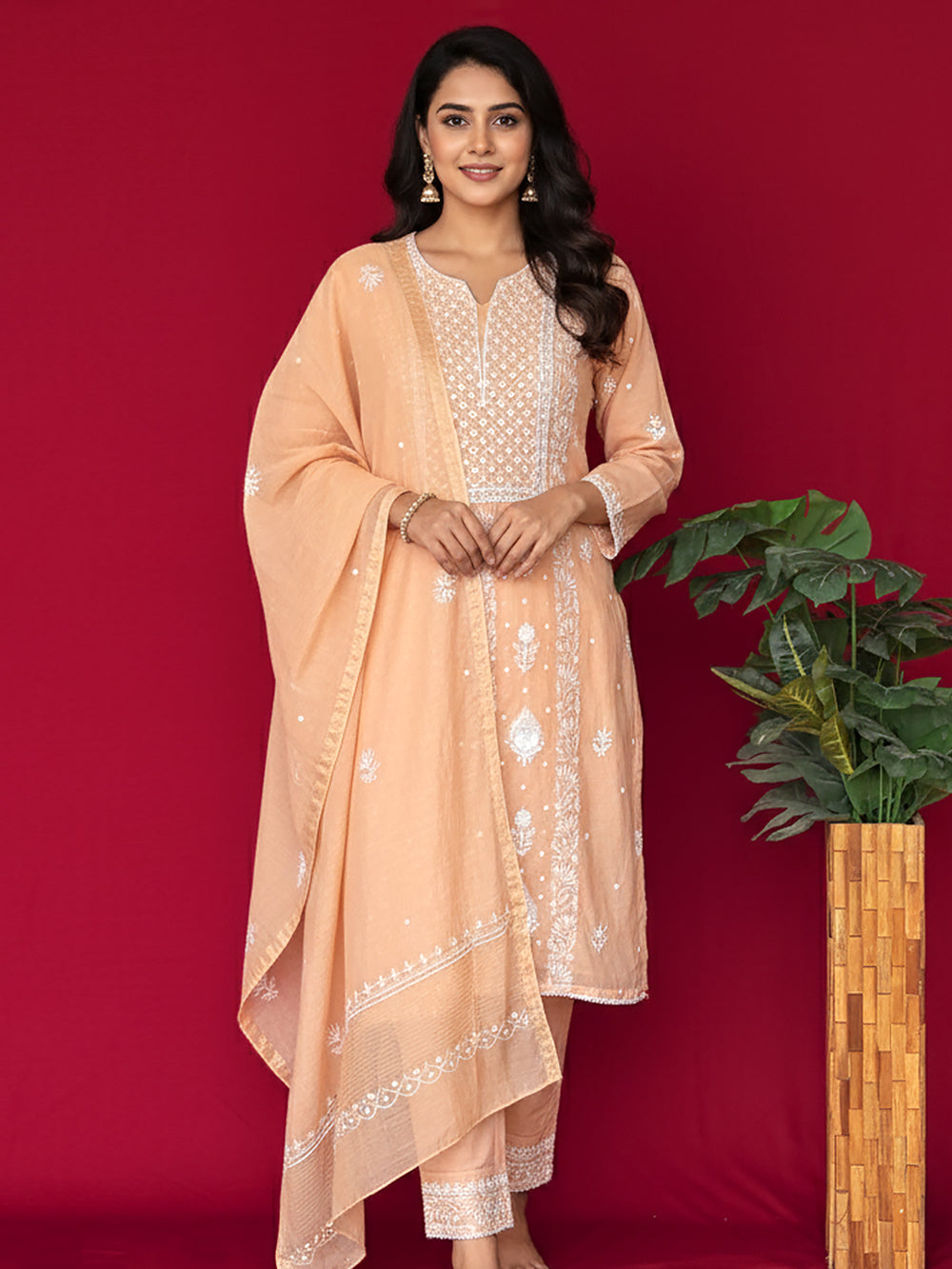
The Beige Mul Chanderi kurta with dupatta is described as having pearl and moti work. These accents sit alongside its floral and paisley Chikankari motifs, adding another layer of detail to the composition.

The embroidery shapes the motif while the rounded accents create a different surface effect. A garment’s decorative description should be read alongside its photographs and material details.

Before: the same garment area showing completed thread embroidery without the added decorative work.

Before And After Embellishment

A comparison of the same area before and after embellishment reveals what the additional work contributes. The underlying thread motif remains visible, while the new decoration introduces another texture or point of light.

The most informative detail is the relationship between the two: where the accent sits, which part of the motif it highlights and how strongly it stands out against the fabric.

A Workshop Photo Essay

Working Together, Creating With Care

A garment brings separate craft roles into a shared design. Design discussion, sampling, feedback and final review each offer a different way to understand that collaboration: the intended look, the material result, the decisions made along the way and the finished piece.

The photo essay below introduces these areas of work. For the wearer, looking at the intermediate stages creates a connection between the details visible in a garment and the conversations that help shape them.

Your actual design discussion with an artisan, including a sketch and fabric sample.

01

Discussing The Design

A useful discussion makes the desired result visible: the garment shape, the chosen fabric and the location of the embroidery. A sketch beside a sample can show how the design is being interpreted.

Motif scale and border placement influence how the work is seen from a distance, while smaller details reward a closer look.

A real unfinished sample or stitch trial beside its design reference.

02

Learning From The Sample

A sample provides a practical reference for texture and placement. It can reveal how an idea reads on the selected fabric before further decisions are made.

A detail may look different in a drawing and in thread. Seeing the embroidered sample helps bring proportion, surface texture and the garment’s intended appearance into the same discussion.

Actual workshop feedback on a sample or embroidery detail.

03

Sharing Feedback

Feedback is most useful when it identifies a specific area of work. A marked photograph or sample can make a conversation about placement, texture or finishing easier to follow.

This exchange connects the design intention with the artisan’s practical understanding of the work. Clear references help everyone discuss the same detail.

The actual final review of embroidery, trims, seams or garment measurements.

04

Reviewing The Finished Piece

Finished-piece photographs bring the craft stages together. Relevant checks can include embroidery appearance, seams, measurements and the decorative details listed for the product.

Looking at the whole garment matters as much as inspecting a close-up. Small handwork variations should be assessed thoughtfully rather than automatically treated as defects or proof of authenticity.

Details To Discover In The Collection

Meet The Craft Through Their Creations

Explore three finished pieces through the contributions visible in their product descriptions. These captions identify fabrics, embroidery and additional decorative work, making the contribution of each technique easier to recognise.

Open a product to see its complete garment information, or continue to our detailed craft guide for the wider process and stitch explanations.

Beige Mul Chanderi Chikankari Straight Kurta With Dupatta

Beige Mul Chanderi Chikankari Straight Kurta With Dupatta

Rs. 7,999.00

Beige Mul Chanderi Chikankari Straight Kurta With Dupatta

Fabric: Mul Chanderi. Embroidery contribution: all-over hand-embroidered floral and paisley Chikankari. Additional decorative contribution: pearl and moti work, as listed for this piece.

The combination lets you compare thread motifs with the added accents. The set includes a kurta and dupatta.

Aanvi Mul Chanderi Chikankari Embroidered Saree - Pink

Aanvi Mul Chanderi Chikankari Embroidered Saree - Pink

Rs. 13,999.00

Fabric: Mul Chanderi. Embroidery contribution: the listing names Chana Patti, Bakhiya, Keel, Zora Patti and Murri. Additional decorative contribution: Mukaish.

This piece brings threadwork and metallic embellishment into one saree. It includes an unstitched blouse piece; refer to the product photographs for its current motifs.

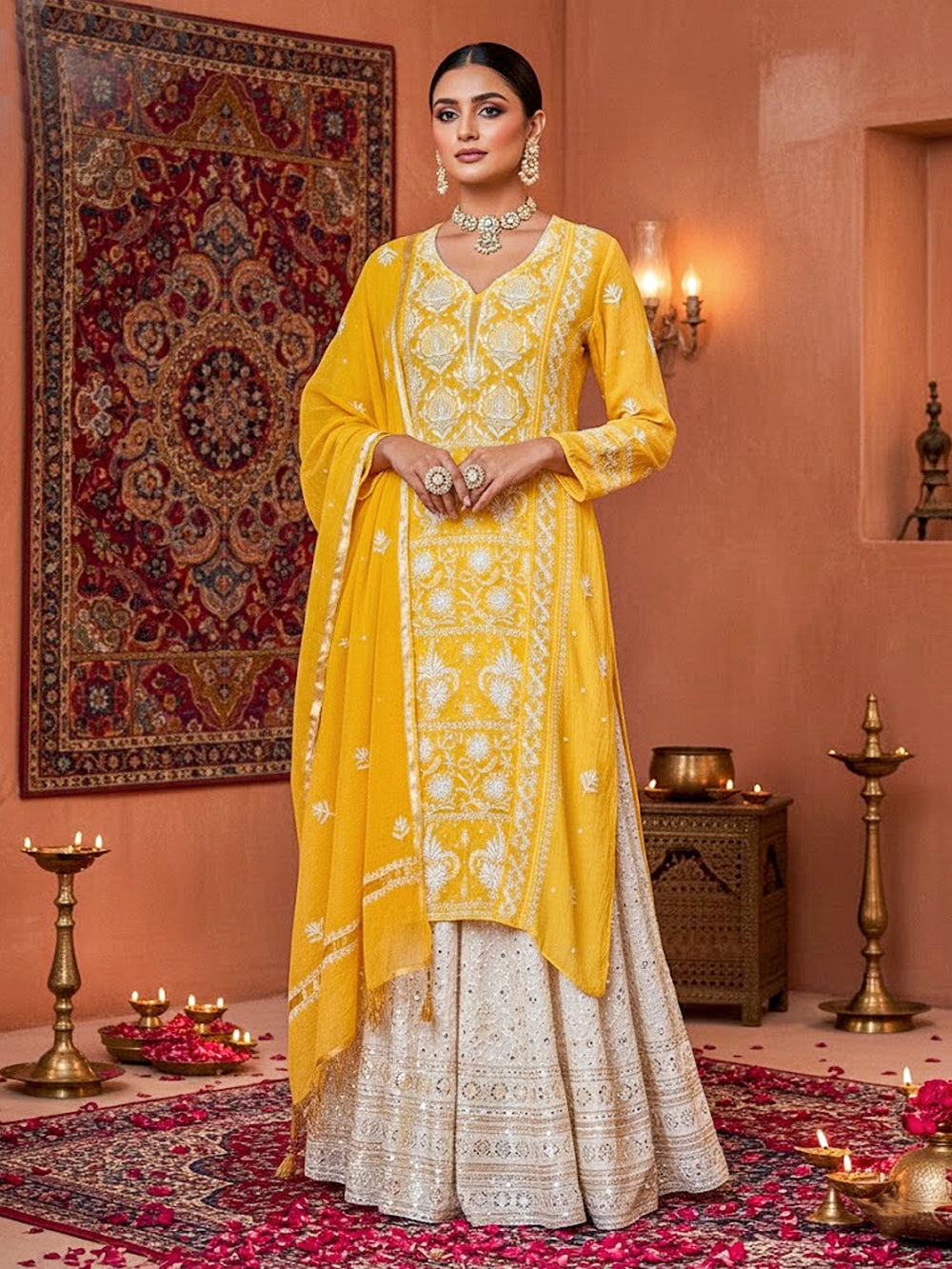
Yellow Mul Chanderi Chikankari Straight Kurta With Dupatta

Yellow Mul Chanderi Chikankari Straight Kurta With Dupatta

Rs. 7,999.00

Yellow Mul Chanderi Chikankari Straight Kurta With Dupatta

Fabric: Mul Chanderi. Embroidery contribution: all-over hand-embroidered Chikankari, as described in the product listing.

The kurta and dupatta allow the composition to be viewed across two pieces. Specific stitch names and additional embellishments are not stated in the listing, so they are not attributed here.