
Sketch & Design Reference
Begin with a design direction, then consider its scale and relationship to the silhouette.


Place, Heritage And Living Skill
Lucknow is an enduring centre of Chikankari, with the craft’s identity carried through local skills and embroidery traditions. The Government of India’s geographical-indications register includes Lucknow Chikan Craft.
History and folklore: a familiar traditional account associates the craft with Mughal empress Noor Jahan; another tells of a traveller who taught embroidery in gratitude for hospitality. These are origin stories, not a securely established founding date or a complete historical record.
Read the Incredible India craft account and Government GI register.

People Make The Difference
An artisan interprets a motif through stitch choice, thread tension and familiarity with fabric. Each technique calls for particular skills.
Workshop photographs and individual stories connect embroidery with the people behind it.
Drawing The Garment’s Character
A motif is considered alongside the garment: its neckline, sleeves, borders, length and the spaces between embroidered areas. Floral and paisley designs can be composed in different ways.
Begin with a design direction, then consider its scale and relationship to the silhouette.

Study the outline, filling and repeated elements that make up a motif’s visual rhythm.

Necklines, sleeves and borders influence where a motif sits and how dense the embroidery feels.
From Marking To Finished Garment
These common craft stages vary with the garment, workshop and any construction or dyeing arrangements.

01
Temporary design markings guide motif position and embroidery coverage on the fabric.

02
Needle and thread develop the printed design using techniques suited to the motif and material.

03
Post-embroidery cleaning removes temporary printing marks, revealing the threadwork more clearly.

04
Threads, construction and presentation are reviewed as the garment is finished and prepared for its next stage.
Read The Detail
Stitch names describe techniques, but terminology can vary between workshops. Use a close-up photograph alongside the name. Garment examples are linked where their current listings explicitly identify the work.
Explore the adapted Chikankari Wholesale stitch guide.

A running stitch that can trace lines, outlines and the foundation of a motif.

Shadow work often formed from the reverse, allowing threadwork to show softly through the fabric’s face.

Small, rounded raised details that add texture, often within floral designs.
A slim, raised rice-grain form used for fine accents and floral details.

A lattice effect created by reorganising fabric threads with needlework, rather than simply cutting out an area.

Leaf-like filled forms; Channa Patti is one variation named in the Aanvi saree listing.
The Material Matters
The foundation changes the effect: fabric weight, texture, transparency and drape all influence how threadwork is perceived.

Compare the fabric’s surface with the embroidery’s density. The same design can feel different on a soft, textured or more structured base.

Examine how the material falls and what the listing says about lining. A fabric name alone does not tell you how opaque a garment will be.

Thread colour and placement influence whether a motif blends into the fabric or stands out. Check the actual garment photographs for that relationship.
From Technique To Your Wardrobe
Explore these three pieces through the fabric and artwork named in their current product descriptions.
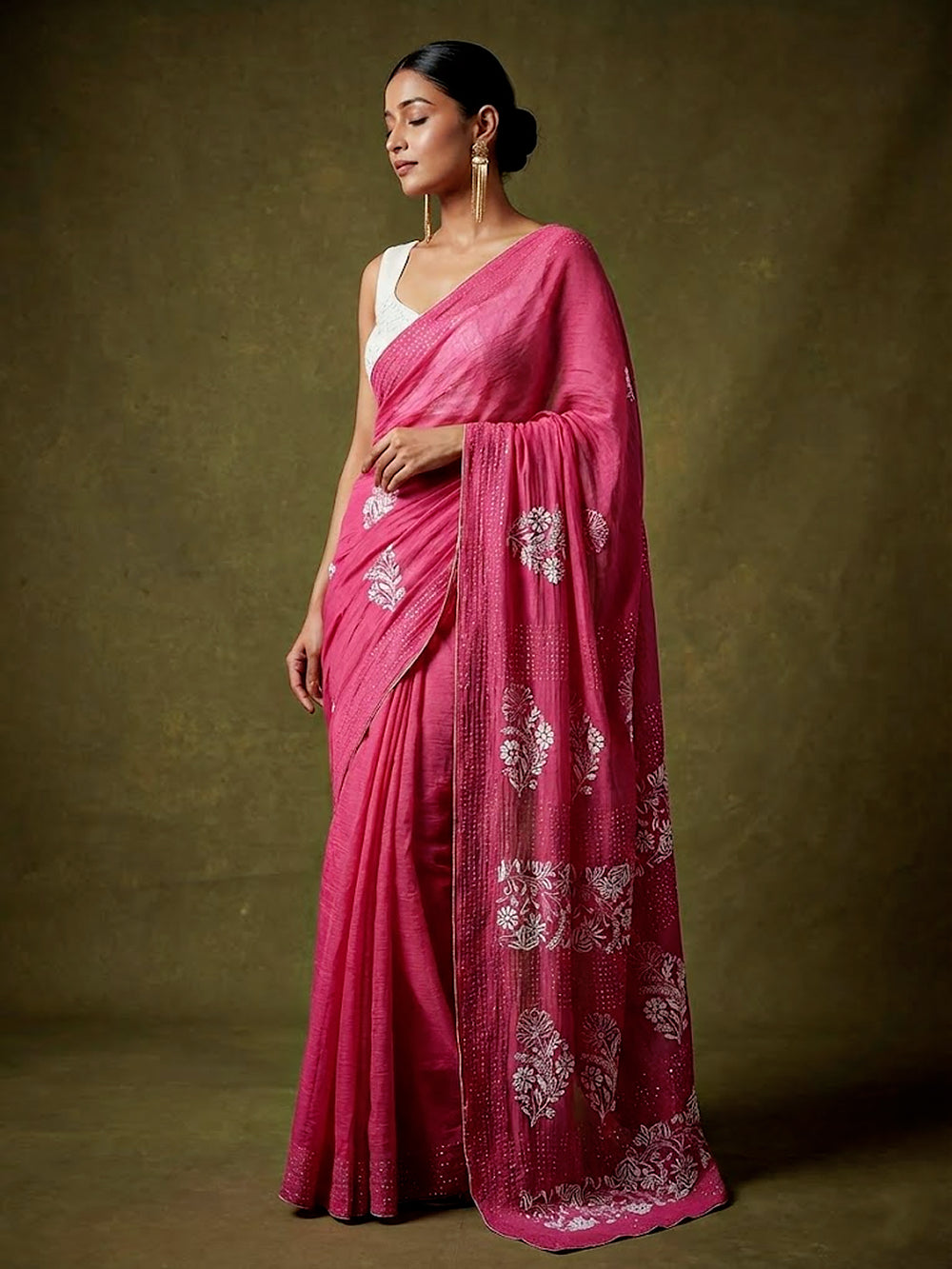
Fabric: Mul Chanderi. Listed artwork: Bakhiya, Murri, Chana Patti, Keel and Zora Patti, with Mukaish embellishment. Mukaish is distinct from the thread-embroidery stitches.
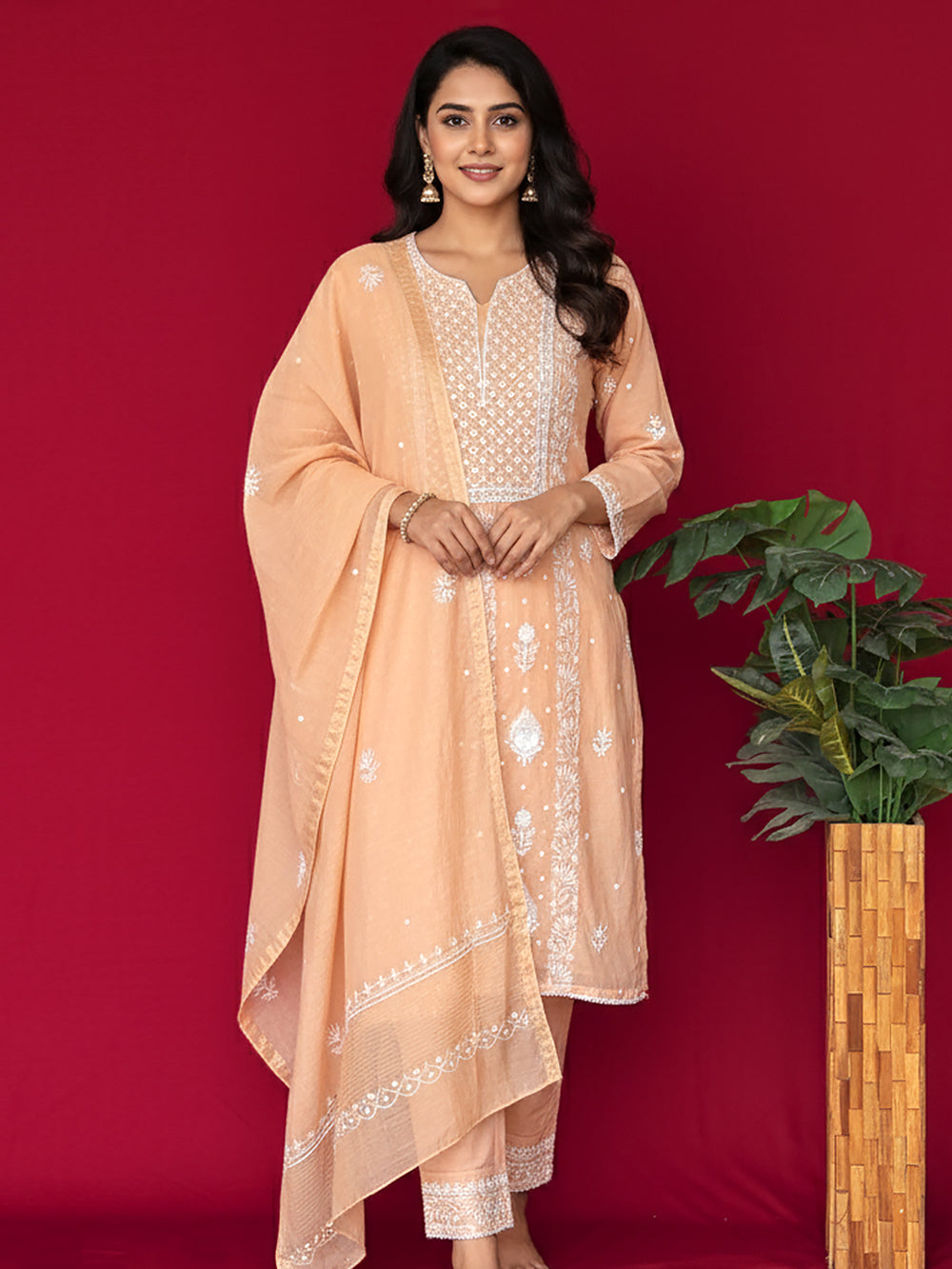
Fabric: Mul Chanderi. The listing describes all-over hand-embroidered Chikankari with floral and paisley motifs, plus pearl and moti work.
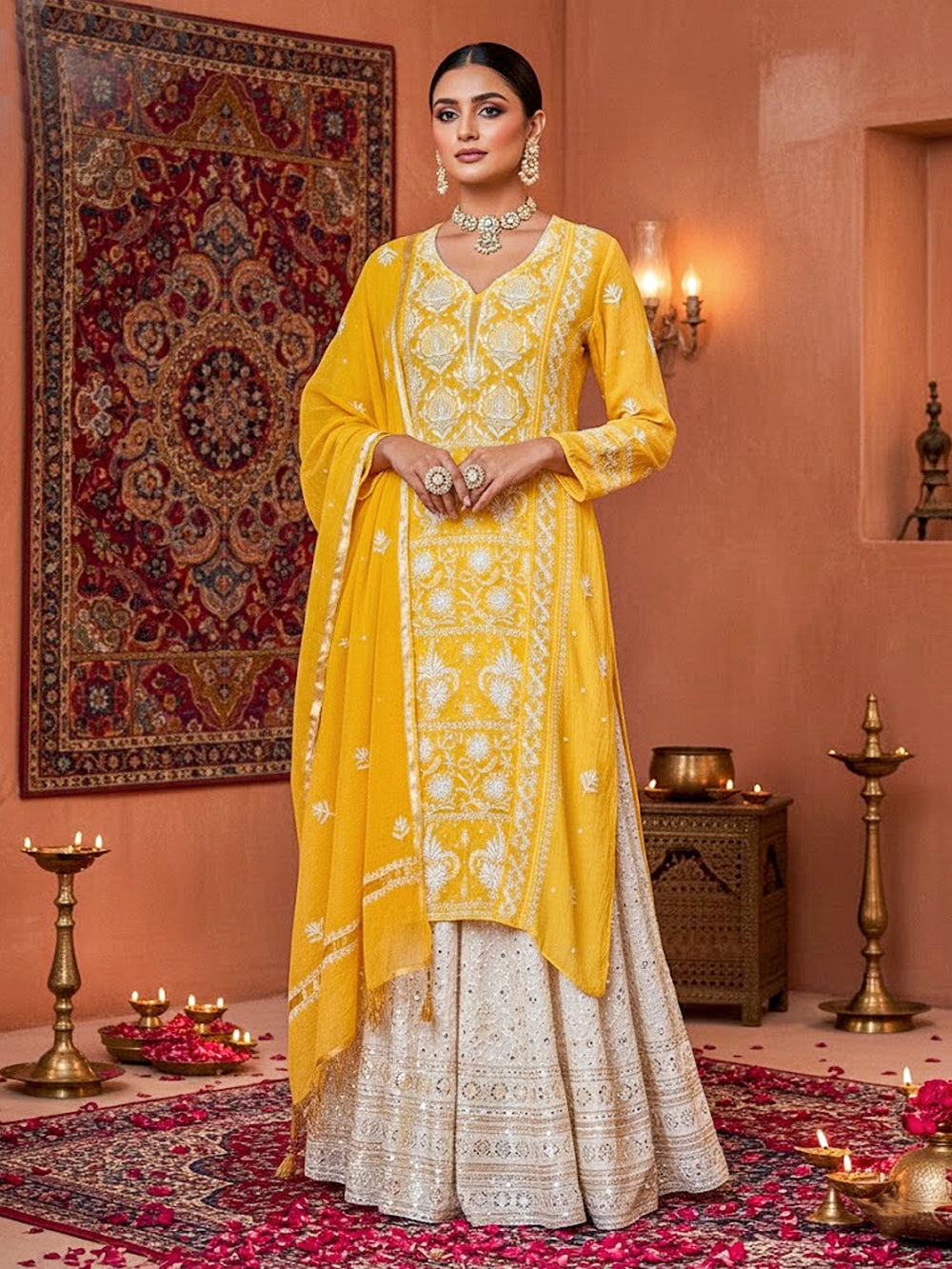
Fabric: Mul Chanderi. The listing describes all-over hand-embroidered Chikankari and includes a kurta with dupatta.